
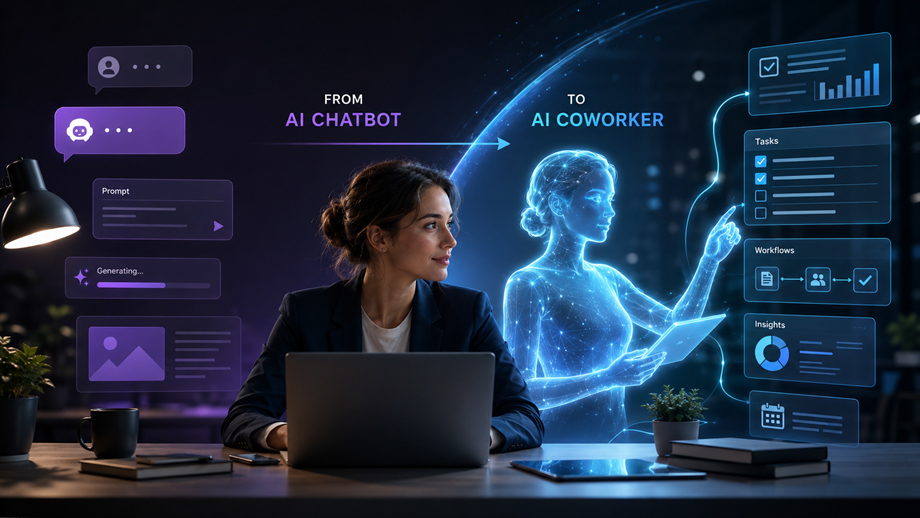
For the past few years, interacting with artificial intelligence has felt like knocking on a door, handing over a note, and waiting politely for an answer. You typed a prompt, received a paragraph, copied it into another tab, and did the rest of the heavy lifting yourself.
That era is rapidly fading. Across boardrooms, engineering teams, and everyday digital workspaces, a quiet revolution is underway—driven by a stealthy new breed of AI that doesn’t just answer questions, it executes outcomes. Without giving away a single brand name, one thing is already clear: whatever comes next in enterprise automation is forcing the world to rethink what "smart software" actually means.
Traditional generative tools were built for conversation, not completion. Ask a standard assistant to draft an email, summarize a report, or brainstorm campaign angles, and it shines. Ask it to reconcile invoices across three systems, verify vendor credentials, update a CRM, and flag anomalies before a deadline slips—and suddenly you are back to micromanaging every step.
That gap between generating text and finishing work is the exact friction point autonomous AI agents are eliminating. Instead of treating each request as an isolated trivia question, modern agentic systems hold persistent context, break broad objectives into subtasks, and move across tools on their own.
| Dimension | Legacy Prompt-Based AI | Next-Gen Agentic Systems |
| Primary Mode | Reactive (waits for each prompt) | Proactive & goal-driven (plans and iterates) |
| Workflow Scope | Single-turn or isolated tasks | End-to-end agentic workflows across tools |
| Human Role | Constant copy-paste & step-by-step steering | Human-in-the-loop oversight & approval gates |
| Core Skill Required | Clever prompt engineering | Context engineering & AI orchestration |
If you look closely at why this mysterious wave of software is turning heads right now, four major trends explain the momentum:
Multi-Agent Systems Over Lone Assistants: Complex operations rarely belong to a single generalist bot. Multi-agent systems divide labor among specialized digital workers—one researching, one validating rules, one formatting outputs—coordinated through clean AI orchestration.
Context Engineering Replaces Clever Wording: Getting reliable results is less about magic phrasing and more about context engineering—feeding systems the right live data, memory, boundaries, and permissions at the right moment.
Browser and Tool Action at Scale: Modern agents don’t stay trapped inside a chat window. Through APIs, terminals, and browser automation, they navigate workflows, check live states, and complete multi-step actions.
Governance-by-Design and Observability: As autonomy rises, trust becomes the currency. Teams increasingly demand audit trails, real-time monitoring, and human-in-the-loop checkpoints before high-stakes actions fire.
When software starts acting rather than merely chatting, the bottleneck shifts from idea generation to system design. Teams that win with autonomous AI agents aren't handing over the keys blindly; they are defining clear guardrails, measurable success criteria, and reversible steps first.
"The real leap isn't that AI can talk more fluently—it's that software can finally carry a task across the finish line while keeping humans in full command of the guardrails."
For creators, operators, and technical builders alike, the takeaway is refreshingly practical: stop measuring AI by how impressive a single demo looks in a chat box, and start looking at how much repetitive coordination disappears from your week.
